News
August 27, 2026
SACAP Brings Global Architecture Leaders to Cape Town to Shape the Future of the Profession
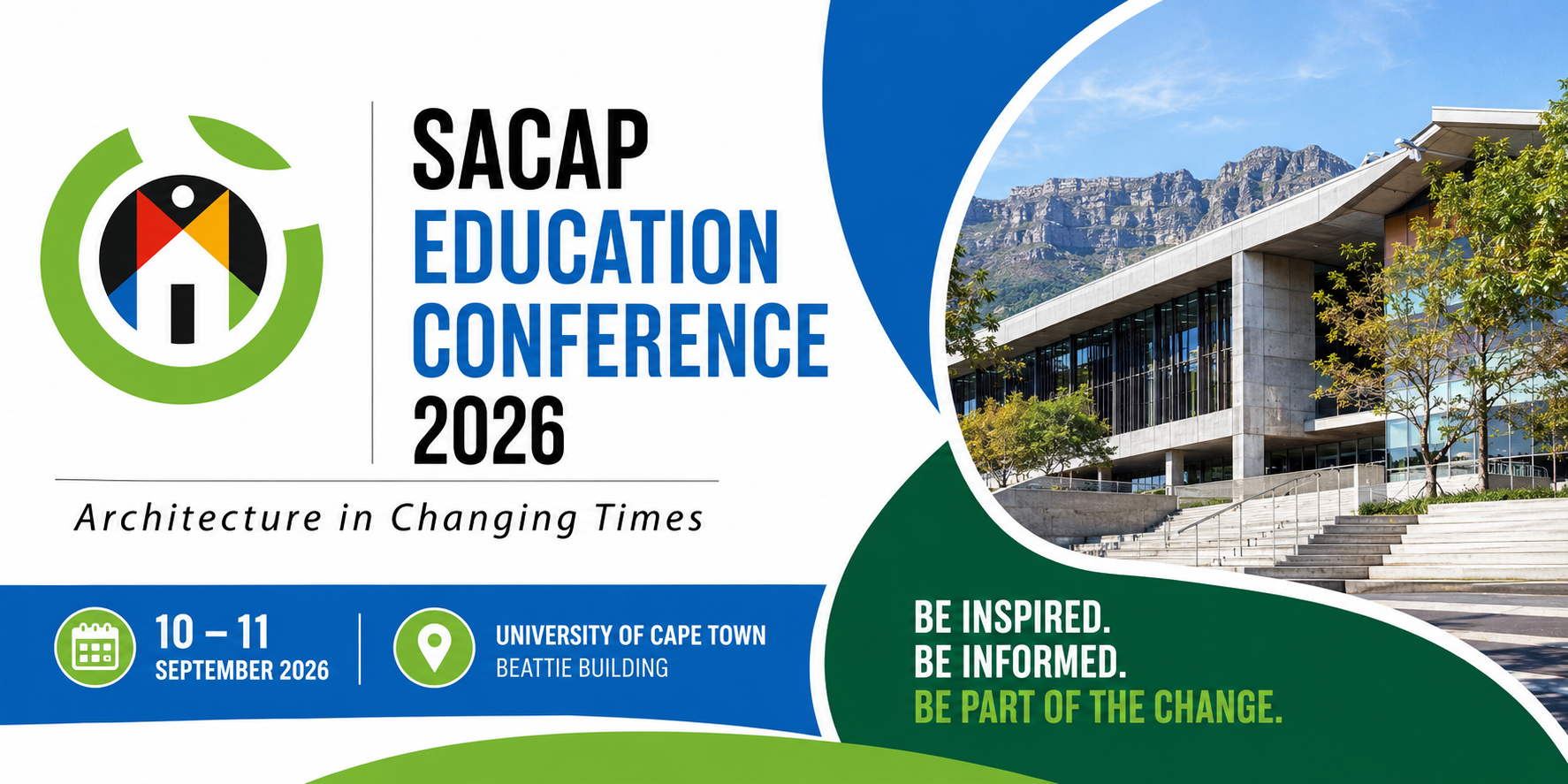
Cape Town, South Africa, 19 August 2026 - The South African Council for the Architectural Profession will convene its inaugural Education Conference at the University of Cape Town’s Beattie Building on 10 and 11 September 2026, bringing together government leaders, international regulators, academics, students and built environment professionals.
Held under the theme Architecture in Changing Times, the conference will examine whether architectural education, professional training and regulation are keeping pace with the realities confronting South Africa and the wider world.
These include pressure to deliver safer human settlements, the effects of climate change, rapid urbanisation, infrastructure constraints and the growing influence of artificial intelligence and digital technologies on architectural practice.
SACAP President Charles Nduku said the conference would create a platform for the profession to examine these challenges honestly and agree on practical responses.
“Architecture is being reshaped by forces that no institution can address alone. We must ensure that our education, training and regulatory systems prepare professionals who can respond to changing social, environmental and technological realities while serving the public with competence, integrity and care,” said Nduku.
The conference will bring architectural learning institutions into direct conversation with candidates, registered professionals, voluntary associations, architectural practices, infrastructure departments, implementing agents, regulators and government representatives.
A central focus will be the journey from academic study into professional practice. Delegates will examine curriculum relevance, workplace experience, mentorship and the barriers that continue to prevent many emerging professionals from achieving professional registration and participating meaningfully in the sector.
“South Africa cannot discuss the future of architecture without considering the people who must build that future,” Nduku said.
“Young professionals need a credible pathway from the lecture room into professional practice. This requires closer cooperation between universities, regulators, government and industry, as well as a serious commitment to mentorship, transformation and professional development.”
The conference platform features local and international leaders with experience across architectural education, regulation, infrastructure and sustainable development.
Expected participants include Professor Ashraf M. Salama, Professor of Architecture and Urbanism and Head of the School of Architecture and the Built Environment at Northumbria University in the United Kingdom; Dong Wang, Director General of the Eco-city Design Center at TURENSCAPE and Deputy Director of the Nature-based Solutions Innovation Center at Peking University in China; Hugh Simpson, Chief Executive and Registrar of the United Kingdom’s Architects Registration Board; and Michael Armstrong, Chief Executive Officer of the United States-based National Council of Architectural Registration Boards.
Western Cape Infrastructure MEC Tertuis Simmers is also listed among the conference participants. The Minister of Human Settlements, Thembi Simelane, will be approached to participate, subject to official confirmation and diary availability.
The programme will cover innovation in architectural education and practice, technology and digital transformation, climate-responsive design, professional governance, curriculum development and the business of architecture.
Delegates will also consider how artificial intelligence, building information modelling and data-driven design can support the profession without weakening professional accountability, ethical conduct or public protection.
For SACAP, these discussions are closely connected to the everyday experiences of South Africans. Decisions made within the architectural profession influence housing quality, public safety, infrastructure resilience and the long-term sustainability of communities.
“The future of architecture must ultimately be discussed in human terms,” Nduku said.
“It is about whether people live in safe homes, whether public buildings serve communities properly and whether the places we design can withstand the pressures ahead. This conference must help us identify what needs to change and translate those discussions into action.”
SACAP expects the conference to produce recommendations for architectural education, professional regulation and industry practice. It also aims to strengthen cooperation between the Council, learning institutions, government, industry and international professional bodies.
The outcomes will be documented to support SACAP’s strategic planning and guide continued engagement on the development of a capable, ethical and future-ready architectural profession.
Architectural professionals, educators, students, researchers, government representatives, regulators and built environment stakeholders are invited to attend.
Conference information and registration are available at https://event.sacapsa.com/.
For media inquiries, please contact Zimkhitha Mquteni-Mabanga +27 78 053 4451
About SACAP
The South African Council for the Architectural Profession is a statutory regulatory body established under the Architectural Profession Act, 2000 (Act No. 44 of 2000). SACAP is legally mandated to regulate the architectural profession in South Africa and protect the public through professional registration, education standards, ethical conduct and accountable architectural practice.
The architectural profession includes professional architects, professional senior architectural technologists, professional architectural technologists, professional architectural draughtspersons, candidates and persons registered in specified categories.
